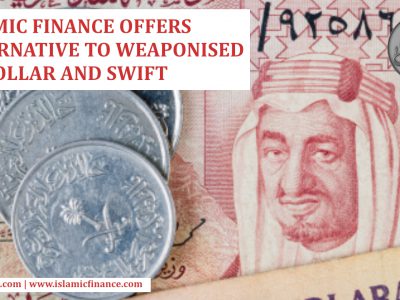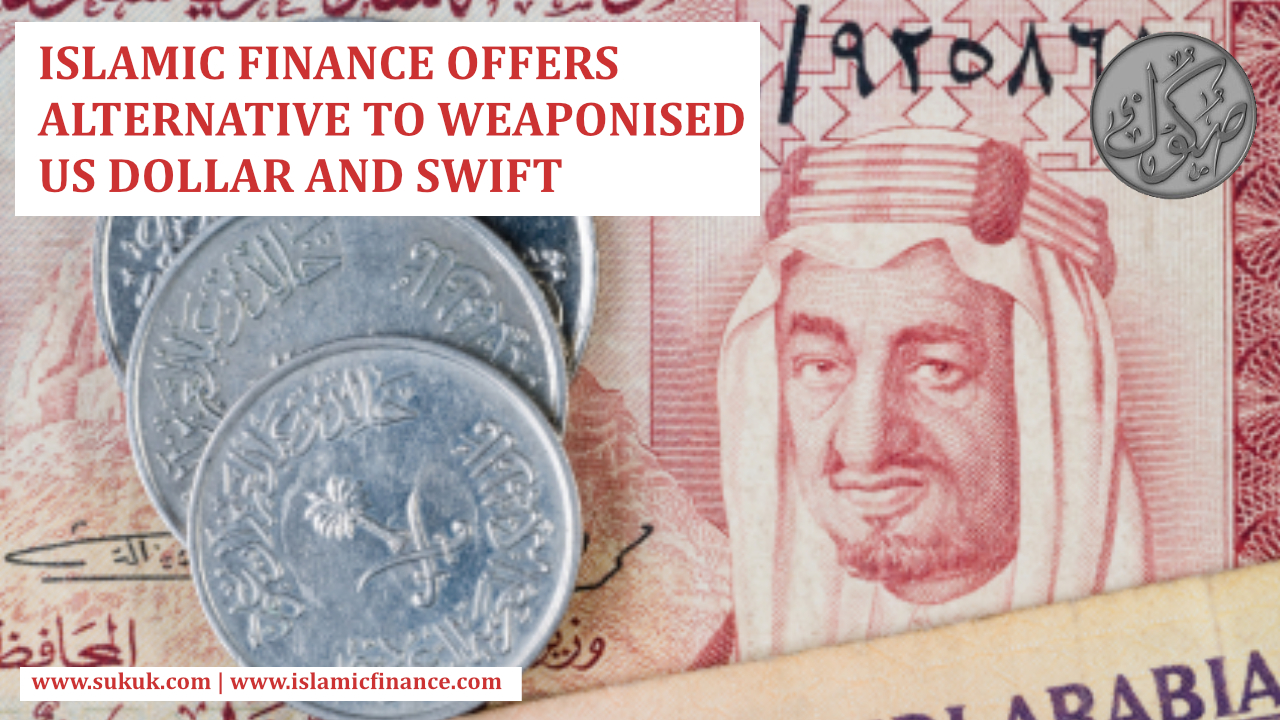
It is both strange and embarrassing that even at this late hour when enemies are about to weld into place the final iron gate of a financial Guantanamo, so many Muslims remain ignorant about the devilish nature of European created money in the Modern World.
Financial Times
London
7 February 2008
Dear Sir,
The esteemed Sheikh Usmani is not the first to cry foul of practices in the Islamic banking industry (Roula Khalaf, Financial Times, 6 February 2008). Sheikh ibn Uthaymeen, Sheikh Haitham Al-Haddad, Professor El-Gamal, Umar Vadillo, myself and others were warning of similar dangers many years ago. However, the criticisms that are...
Dear Sir,
Over the last few weeks, I have read a succession of articles in your publication that describe the current financial crisis. None properly explain its cause. We are now experiencing a predictable repetition of economic history, a crisis-in-waiting, and in the absence of an honest diagnosis we will continue to do so in future.
For three hundred years, commercial banking...
Reproduced from the preface of the third edition of The Problem With Interest (Kreatoc Ltd., 2010, ISBN: 978-0-9544974-1-5)
In the seven years since the second edition of The Problem With Interest was published, the global economy has completed another boom-bust cycle. It is a cause for great concern that the banking system which is responsible for this latest crisis should be bailed out by...
During the late 1980's an opportunity came my way to become an option dealer in the London capital market. At that time I was not a practising Muslim and, given that the pay in this line of work could be enormous, I accepted without a second thought. As the years went by, it occurred to me that the size of my pay packet bore little relation to the benefit enjoyed by society as a result of my...
As to what follows
Among the duties of the Shariah Council, as stated in the statutes of the Accounting and Auditing Organization for Islamic Financial Institutions is the following:
To bring about mutual conformity or approximation between the conceptualizations and the practical applications of Shariah supervisory boards of Islamic financial institutions so as to avoid inconsistencies and contradictions between the fatawa and the implementations of these institutions in ways that lead to the effectiveness of the role of Shariah supervisory boards in Islamic financial institutions and central banks. Continue reading →
Islamic banking industry has grown rapidly during the past three decades spreading its operations in many parts of the globe. Making its first debut in the small Savings Association of Mitghamr (Egypt) in 1963, its strength has now reached over 250 financial institutions operating in more than 40 countries with assets valuing USD 750 billions, and an annual growth rate of 15 per cent. Almost all the giant conventional banks are in queue to establish their Islamic units to capture the new emerging market. This rapid growth of Islamic financial industry is, no doubt, encouraging for those who wished to relieve themselves from the prohibition of interest on the one hand and to remain a part of the modern market economy on the other. Continue reading →
الحمد للہ رب العالمین٬ والصلوۃ والسلام علی سيدنا ومولانا محمد وعلی آلہ وأصحابہ أجمعین وعلی كل من تبعہم بإحسان إلی يوم الدين۔أمابعد
Post Crisis Reforms:
Some Points to Ponder
Modern economics has been used to a purely materialistic and secular approach that does not allow religious concepts to interfere with its theories and concepts, on the premise that economy is outside the domain of religion. It is, however, an interesting irony that every dollar note has the admission: “In God we trust”, but when it comes to develop theories to earn dollars or to distribute or spend them, trust is placed only on human ideas based on personal assessments; God is held totally out of picture, as being irrelevant to economic activities!!!Continue reading →
Excerpt from Introduction to Islamic Finance by Mufti Muhammad Taqi Usmani
‘Musharakah’ is a word of Arabic origin which literally means sharing. In the context of business and trade it means a joint enterprise in which all the partners share the profit or loss of the joint venture. It is an ideal alternative for the interest-based financing with far reaching effects on both production and distribution. In the modern capitalist economy, interest is the sole instrument indiscriminately used in financing of every type. Since Islam has prohibited interest, this instrument cannot be used for providing funds of any kind. Therefore, musharakah can play a vital role in an economy based on Islamic principles. Continue reading →
Highlights of an interview given by Dr. Abdul Iwanto in London during the “World Conference on Islamic Finance: Thrusting into the 21st Century”.
Q. Thank you for agreeing to be interviewed by us, Dr. Iwanto. Can I begin by asking what are your thoughts on globalisation?
A. Well, first of all I don’t want to be associated with people who moan about globalisation and the IMF. I’m a progressive Muslim and I want to be liked by people in the West. Globalisation means the spread of Western culture and institutions. It’s happening because people prefer those things over the alternatives. We have to realise that and adopt Western culture as quickly as possible. That’s as true in finance as it is anywhere else. Credit card … Islamic credit card. Mortgages … Islamic mortgages. See what I mean? Continue reading →
It is both strange and embarrassing that even at this late hour when enemies are about to weld into place the final iron gate of a financial Guantanamo, so many Muslims remain ignorant about the devilish nature of European created money in the Modern World.